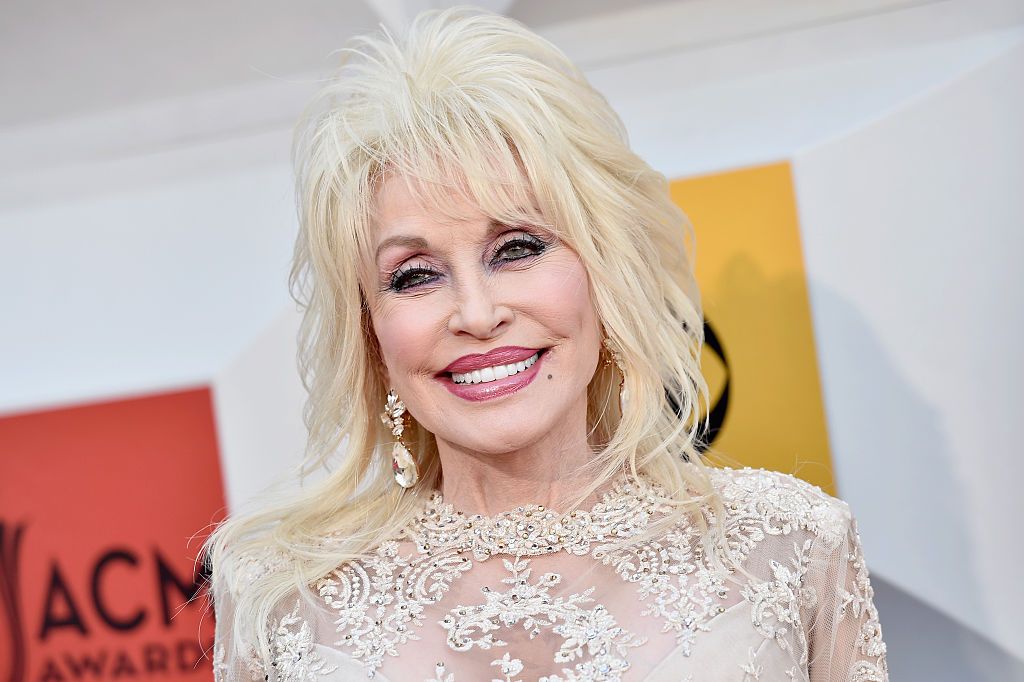
Not because Dolly was Black. Not because proximity to Black celebrities automatically grants somebody honorary membership in our community. And certainly not because every beloved white celebrity needs to be posthumously transformed into a civil rights activist.
We lost someone who understood something about power that many people never learn:
When life gives you a lot of room, you don’t have to occupy all of it yourself.
Sometimes the assignment is to make room for somebody else.
And Dolly Parton had an extraordinary amount of room.
By the time Dolly Parton spoke, she did not need country music’s permission to remain Dolly Parton.
And that is important to understanding why her choices mattered.
There Are Beckys. There Are Hannahs. And Then There Was Dolly.
As a native Nebraskan, I have spent a significant portion of my life in relationship with white women, and somewhere along the way I developed my own unofficial classification system.
There are Beckys, and there are Hannahs.
A Becky is the most problematic version of a white woman: somebody who hears a critique of whiteness and immediately needs the conversation to become about whether she personally is a good person.
A Hannah understands that she is a white woman. She understands there is power associated with that whiteness. She does not confuse an interrogation of white supremacy with a personal attack against her.
More importantly, she asks what can be done with the access she possesses.
Dolly understood that assignment in ways I wish more white women did.
Because one of the hardest things for people with enormous platforms to do is allow somebody else to become bigger while standing on something they created.
Dolly did that with Whitney Houston.
She Let Whitney Have The Song
“I Will Always Love You” belonged to Dolly Parton long before Whitney Houston touched it.
Dolly wrote it and recorded it.
Then Whitney sang it.
And suddenly, a song Dolly wrote became one of the defining vocal performances in modern music.
There were endless opportunities for Dolly to make Whitney’s success with the record about Dolly’s ownership of it.
She didn’t.
At the 1994 Grammys, Dolly and producer David Foster presented Whitney with Best Pop Vocal Performance for the song, and Whitney stood in front of Dolly and thanked her for “writing beautiful songs.”
And Dolly’s pride in Whitney’s interpretation remained.
Beyoncé didn’t simply reproduce Dolly’s “Jolene.” She reconstructed its posture.
The woman begging Jolene not to take her man became a woman warning Jolene not to try.
And Dolly didn’t respond with territorialism.
She joined the album.
She became “Dolly P.”
After hearing Beyoncé’s reinterpretation, Dolly publicly celebrated it, joking that Beyoncé was “giving that girl some trouble.”
Again: room-making.
Dolly Knew When White People Needed To Hear Her
Dolly’s relationship to Black people cannot simply be measured by Whitney Houston, Patti LaBelle, or Beyoncé.
There were moments when she talked directly to white people about us.
In 2020, amid the racial uprisings following George Floyd’s murder, Dolly was asked about Black Lives Matter.
Her response was not buried beneath paragraphs of political doublespeak:
“Of course Black lives matter.”
Then, in perhaps the most Dolly Parton way possible, she asked CBS whether white people thought their “little white a**es” were the only ones that mattered.
I need us to understand who was saying that.
A 74-year-old white woman from Tennessee.
One of country music’s most recognizable figures.
A woman with substantial business interests tied to Southern tourism and a massive white fan base.
She had something to risk.
And this wasn’t the only example.
Her dinner attraction was once called the Dixie Stampede. After criticism surrounding the Confederate implications of “Dixie,” Dolly dropped the word from the attraction’s name.
What matters to me is how she described learning.
Dolly acknowledged that people can participate in harm through what she called “innocent ignorance.” But once you understand that something is hurting people, her philosophy was remarkably simple: fix it.
She told Billboard, “As soon as you realize that [something] is a problem, you should fix it.”
That is a lesson far bigger than Dolly Parton.
White allyship cannot become an endless performance of:
But I didn’t know.
But I didn’t mean it that way.
But I’m a good person.
Sometimes the appropriate response is simply:
I know something today that I didn’t know yesterday. Now something I control has to change.
And As A Black Trans Woman, I Will Remember This Too
I came out at 12 years old.
I am 44 now.
So when I think about Dolly Parton’s legacy, I cannot separate her from the queer community that embraced her and that she repeatedly embraced back.
Dolly existed at the intersection of country music, Southern culture, and Christianity—three spaces that have all, at different moments, been weaponized against LGBTQ people.
She refused to behave as if rejection of us was required for her to belong to any of them.
In 2011, a lesbian couple visiting Dollywood’s Splash Country said an employee forced one woman to turn her marriage-equality T-shirt inside out.
Then she said something important about the institution carrying her name:
“Dollywood is a family park, and all families are welcome.”
That matters.
Because allyship cannot simply exist everywhere except the spaces you actually control.
Dolly was saying:
If my name is on the room, you should be able to enter it too.
In 2014, she was even clearer.
Talking about her gay following and the Christians who judged LGBTQ people, Dolly told E! that people should be allowed “to be who they are, and to love who they love.”
And she didn’t abandon Christianity to arrive at that position.
She challenged Christians from inside Christianity.
If people wanted to pass judgment, Dolly argued, they were already sinning themselves.
That distinction matters to me.
Dolly wasn’t saying:
I love queer people despite my Christianity.
Her ethic seemed much closer to:
My Christianity does not give me permission to condemn you.
And then there were transgender people.
In a 2023 interview with The Hollywood Reporter, Dolly spoke about LGBTQ people inside her own family, including transgender relatives.
She talked about seeing how brokenhearted transgender people became when their lives and identities were politicized. She acknowledged how real those identities were to them and concluded that judgment belonged to God.
For a Black trans woman raised in relationship with Christianity, there is something deeply meaningful about hearing a woman from Dolly’s world refuse the proposition that loving God requires rejecting me.
She had something that can be even harder to cultivate:
an ethic.
Black lives matter.
People deserve dignity.
Love who you love.
If you discover something you control is causing harm, change it.
And God did not appoint you to spend your life policing everybody else’s humanity.
The Intercessor For Room
There is an old television clip I love of Dolly sitting next to Patti LaBelle.
Somehow the conversation becomes about their fingernails.
Patti shows Dolly how she uses her long acrylic nails as percussion.
Dolly immediately joins her.
Soon these two glamorous women with enormous hair and long nails are making music together and laughing. The clip has survived as one of those wonderfully intimate pieces of pop-culture history.
It’s a tiny moment.
But something about Dolly’s relationship to Black culture lives inside it for me.
She knew how to enter somebody else’s cultural space without demanding that the furniture be rearranged around her.
And maybe that leads me to the word I’ve been searching for while thinking about her death:
Intercessor.
We usually imagine intercession as somebody standing between another person and danger—defending, protecting, praying, or advocating.
I think Dolly Parton practiced another kind of intercession.
She interceded for room.
God gave that poor girl from the Smoky Mountains an extraordinary amount of it.
Money.
Fame.
Institutional respect.
Cultural authority.
Businesses.
Songs that will probably outlive all of us.
And again and again, there were moments when she turned around and made some of that room available to somebody else.
That feels familiar to Black people because, at its best, that is part of our understanding of liberation.
My abundance should create abundance around me.
My access should increase somebody else’s access.
My freedom should make more freedom possible.
My success should not require your smallness.
That is the coat of many colors I believe Dolly leaves behind.
And it is the coat I wish more white women understood how to wear.
One stitched with enough self-awareness to know that acknowledging racism does not diminish you.
Enough humility to allow a Black woman to transform something you created without needing to reclaim the spotlight.
Enough conviction to look at other white people and say plainly that Black lives matter.
Enough humanity to recognize queer and transgender people as God’s children before reducing us to political controversies.
And enough abundance to understand that possessing power does not always mean exercising power over somebody.
Sometimes power means opening the door.
Sometimes power means moving your chair.
Sometimes power means understanding that God gave you all that room because you were supposed to make some more.