Brandy's Body Of Work Is Bigger Than The Latest Conversation
Don’t Be Fooled By The Moon: Brandy’s Body Of Work Is Bigger Than The Latest Conversation [Op-Ed]
- Brandy's unreleased music and groundbreaking representation in TV/film cement her icon status beyond chart success.
- Dissecting Brandy's body reflects a larger pattern of policing Black women's bodies as evidence of their worth.
- Brandy's journey reminds us to celebrate people's art and humanity, not judge their bodies as a measure of their value.
Brandy’s unreleased music is more legendary than some artists’ entire discographies.
I know how that sounds coming from somebody who would comfortably describe herself as the biggest Brandy fan in the world. “Fooled by the Moon,” the Diane Warren-penned ballad recorded during the Never Say Never era, was never officially released, yet Brandy fans have carried it for years like a classic.
After more than three decades of music, television, film, and culture-shifting representation, people found a way to look directly at Brandy Norwood and miss what was standing in front of them.
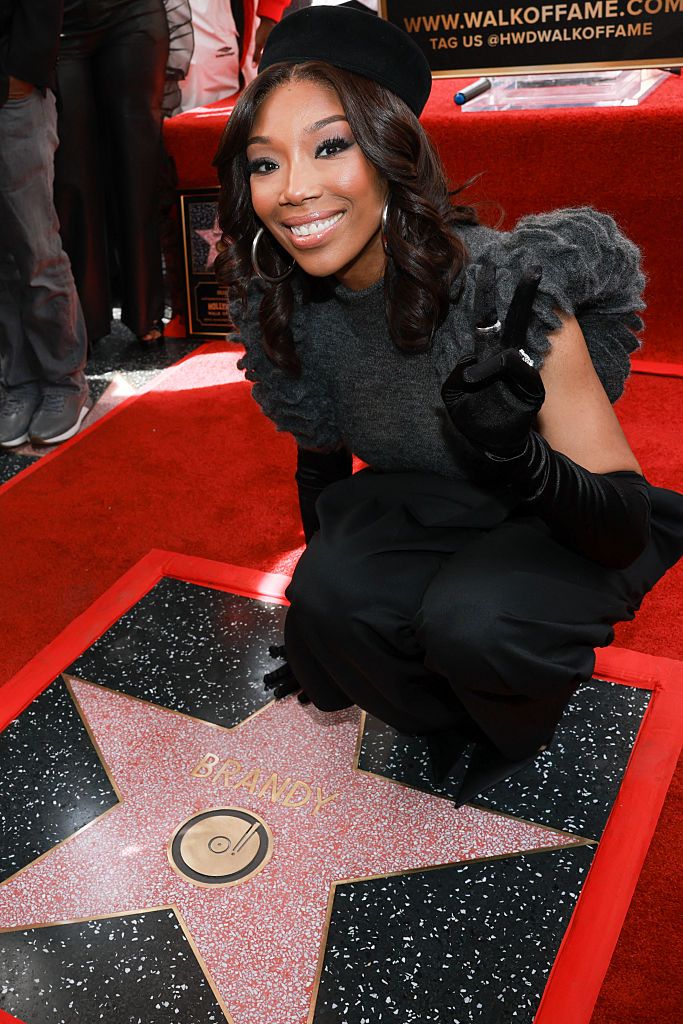
Only weeks ago, one of my goals at the ESSENCE Festival of Culture in New Orleans was to see Brandy—not only as the child who grew up listening to her, but as the 44-year-old Black trans woman I have become.
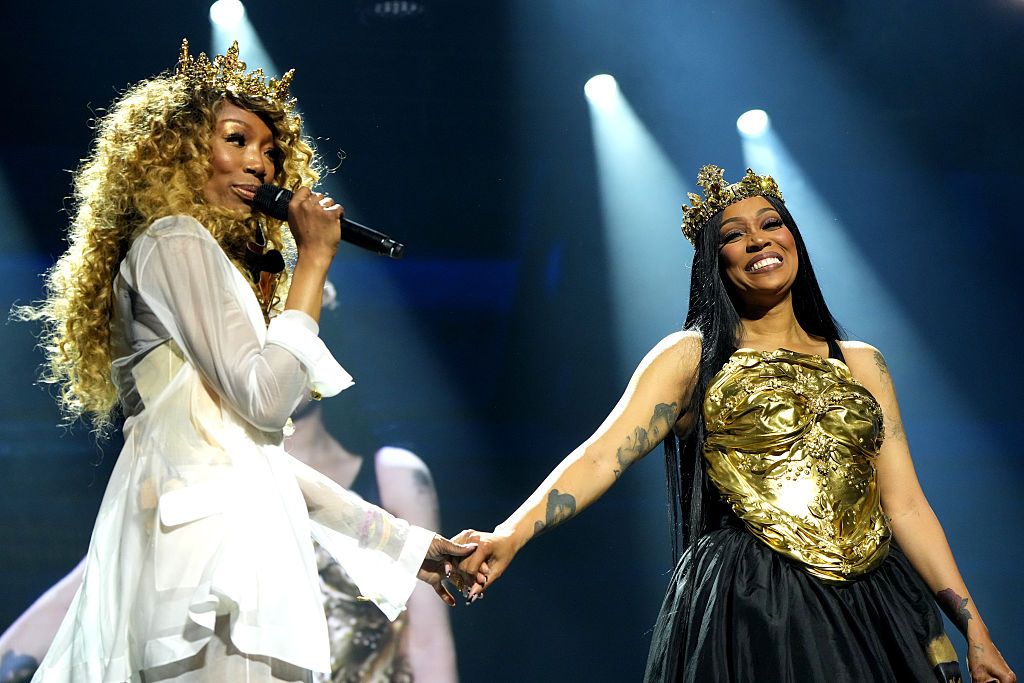
I watched Brandy and Monica close the Superdome with a show honoring both their catalogs and the history connecting them. Brandy brought out MC Lyte and Yo-Yo for “I Wanna Be Down,” honored Whitney Houston, and ended the night placing a crown on Monica’s head as Monica crowned her. For two women whose careers were turned into a competition, it was moving to watch them choose reverence instead.
The following day, I watched Brandy receive the Legend Award at the ESSENCE Black Women in Music luncheon. I listened as she spoke about faith, artistry, and the seasons when she wondered whether her voice still mattered.
I stood beside her.
So when photographs from a celebration in McComb, Mississippi, began circulating and people started speculating about her weight and health, I felt disoriented. I had just watched this woman command the Superdome. I had felt the force of her presence and heard the clarity with which she spoke about who she had become.
Then I opened social media and watched people try to erase all of that by deciding they could explain her life through the size of her body.
Brandy eventually addressed the commentary. She admitted that it hurt and asked people to become gentler with one another, because an appearance can be judged in seconds while the life behind it may take years to understand.
Even after that, E! News correspondent Will Marfuggi joined the same conversation she had challenged. During an interview about the body-shaming, he told Brandy that, from several feet away and based on their limited interaction, she looked “pretty good.”
She thanked him.
Then the notorious Aquarius came forward.
“I look more than pretty good. Saying I look pretty good is crazy. I don’t like that.”
It was funny because Brandy’s delivery was funny. But she was not being unserious. She had explained that she did not want to be assessed, and his response was another assessment.


He thought the problem was the harshness of the verdict. Brandy understood that the problem was the public believing it had the authority to issue one. (Baller Alert)
She did not want to be graded.
And “pretty good” is an absurd way to describe Brandy Norwood.
This is the Vocal Bible.

Singers isolate her parts and try to figure out how she built them. They study the smoke in her tone, the restraint, the precision of her runs and those background vocals that can make one woman sound like a sanctuary full of people.
Never Say Never made clear that she would not disappear when the 1990s ended. “Have You Ever?,” “Almost Doesn’t Count,” “Angel in Disguise” and “The Boy Is Mine” gave us different languages for longing, disappointment and determination.
The duet with Monica spent 13 weeks at No. 1 and earned Brandy her Grammy.
Then came Full Moon.
Brandy’s backgrounds answer her, contradict her and sometimes seem to surround her. The songs are not merely sung. They are constructed. More than two decades later, Full Moon is still recognized as a blueprint for contemporary R&B.
You can hear what Brandy made possible in artists such as SZA, H.E.R., Chlöe Bailey and Coco Jones—not because they are copies, but because she expanded the language available to them.
Her contribution to Black culture cannot be measured through music alone.
Moesha gave us a brown-skinned Black teenage girl with braids who was allowed to be at the center of everything. She was intelligent, stylish, stubborn, loving and sometimes dead wrong. Her friendships, crushes, private thoughts and family conflicts mattered.
Black girls had too often entered television stories as the friend, the problem or the lesson. Moesha’s interior life was not supporting material. It was the show.
Then Whitney Houston chose Brandy to become Cinderella.
In Rodgers & Hammerstein’s Cinderella, a Black girl with braids put on the blue gown and stood in the center of the fairy tale. Whitney became the Fairy Godmother and handpicked Brandy for the title role. More than 60 million people watched the original broadcast.
Black children did not have to mentally replace a white princess with ourselves. Brandy was already there, with Whitney beside her, telling her impossible things could happen.
As a Black trans woman, I understand what it means for people to study your body as if it contains evidence about the validity of your personhood.
Is your womanhood real enough? Is your body shaped correctly? What does your body supposedly reveal about your Blackness, your gender, or your right to be protected?
Before I had the autonomy or language to manifest my womanhood openly, I experienced parts of Black girlhood through Brandy. I watched her sing “I Wanna Be Down,” become Moesha, step into Cinderella’s gown, become a mother, and claim her place as an icon. Before I could fully name the woman I was, Brandy gave me a way to imagine her.
But the connection is not mine alone.
Black women now in their 40s and early 50s did not merely watch Brandy grow up. We measured pieces of our own girlhood beside her. We remember the hairstyles, the heartbreaks, and the first time we saw a Black Cinderella.
So when people dissect Brandy’s body, the cruelty travels. It reaches women who have spent their lives being told their bodies are proof of how successfully—or unsuccessfully—they are performing womanhood.
Some people defended Brandy by invoking Chadwick Boseman, whose shrinking frame was mocked before the public knew he was living with colon cancer. His story should have taught us that we rarely know what another person is carrying.
But possible illness cannot be the only reason we stop ourselves from being cruel. A person should not have to be sick before their body becomes none of our business.
I thought about Whitney Houston at Michael Jackson’s 30th anniversary celebration, too. Her walk and silhouette were legendary before she opened her mouth, and then she gave one of the night’s most memorable performances. Still, much of the conversation centered on her thinness. Her art had to compete with a diagnosis strangers believed they could make by looking at her.
Brandy, Whitney, and Chadwick left bodies of work large enough to survive public scrutiny. Most people do not have that protection.
The person being dissected may be the barista handing us coffee, the teacher in front of our children, the relative whose body has changed, or the child listening while adults decide which bodies are acceptable enough to respect.
That matters in a culture determined to construct the meaning of Black bodies before Black people can define ourselves. Our bodies are made into evidence of danger. Our hair becomes evidence of professionalism. Our gender expression becomes evidence of morality. Our weight becomes evidence of discipline, health, or failure.
Social media takes those old habits and speeds them up. We can turn a photograph into a diagnosis before breakfast. By lunch, strangers have agreed on a story about someone they have never met. Then we call it “concern” because concern sounds kinder than surveillance.
Pop culture gives us a chance to catch ourselves in the act. The point cannot be to defend our favorite celebrity for three days and then repeat the behavior with somebody we do not admire.
What are we learning from the way people talked about Brandy? What are we teaching our children? How many of us speak to ourselves in that same language?


